ADA Compliant Portable Toilets: Grab Bar and Water Wardrobe Clearance Essential
When individuals ask about an ADA compliant portable bathroom, they usually expect a fast response, something like, "Just purchase the bigger unit." That is usually where trouble starts.
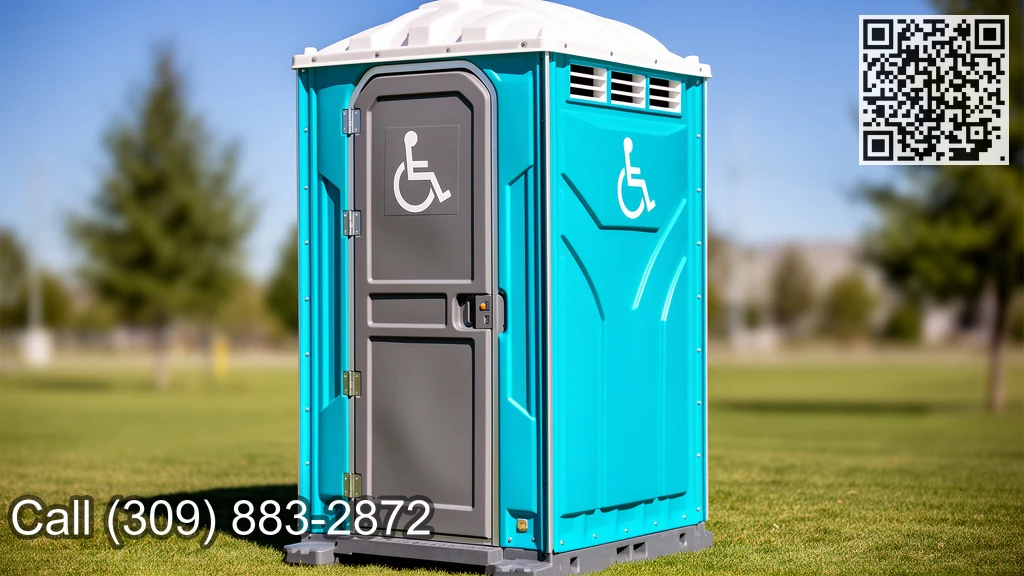
Size matters, but it is not the whole story. An ada available mobile toilet needs to benefit actual people in genuine conditions. That suggests the individual has to be able to approach it, enter it, move inside it, utilize the toilet, and leave it without battling the format. If grab bars are mounted in the incorrect location, or the water closet clearance is blocked, the system might look obtainable from the outside while failing where it counts most.
That space between appearance and real use appears all the time at celebrations, wedding celebrations, community fairs, emergency action websites, and public jobs tasks. I have seen event teams feel great because they reserved one ada mobile washroom, just to place it beside a muddy area without secure course to the door. I have additionally seen a supposedly accessible unit ended up being virtually worthless because products, hand sanitizer stands, or waste bins were put right into the interior corners that needed to remain clear.
If you rent, take care of, or location portable bathrooms, the fundamentals deserve understanding. Not to end up being a code expert overnight, however to prevent pricey misconceptions and to make much better choices prior to distribution day.
The requirement that regulates the conversation
For mobile commode leasings in the USA, the managing federal ease of access requirement is the 2010 ADA Standards for Accessible Design. That matters because lots of people still rely upon older general rules, old specification sheets, or vendor language that seems calming yet is too obscure to be trusted on its own.
The present standard is not just whether the unit is "spacious" or marketed as wheelchair-friendly. The device has to please accessibility requirements that apply to commode rooms, including the called for clearances, transforming space, door navigating demands, and the placement and function of grab bars. The fact that a toilet is short-lived does not eliminate those obligations. The Accessibility Board has actually explained that the accessible-unit need applies also at short-lived events when mobile toilets are grouped in a cluster.
That one point surprises individuals regularly than it should. Short-lived does not indicate optional.
There is one narrow wrinkle worth noting since it creates confusion in the area. Older ADA product distinguished mobile commode devices at building websites made use of specifically by building and construction employees, and those were treated differently under the older scoping language. People sometimes overgeneralize from that and presume portable systems are broadly exempt. They are not. For basic ada portable commode rental situations, particularly when systems are attended to the general public or for non-exclusive usage, the accessible-unit demand still matters.
What "5 percent obtainable" truly means on the ground
If you have a collection of mobile single-user toilet devices, at least 5 percent of the devices because cluster should come. In practice, the majority of little services round this problem right into a simple choice due to the fact that you can not offer a portion of a commode. If a site has a small bank of mobile units, that typically implies a minimum of one obtainable system is needed.
The essential expression is "in each cluster." That information can get lost throughout website preparation. Suppose an occasion has one toilet bank near the entry and one more near the food location. You can not safely think one ada certified easily accessible mobile washroom positioned in a far-off edge covers both teams. Each collection has to be considered on its own.
That matters for individual dignity as long as conformity. A visitor must not have to cross a parking area, gravel lane, or crowded event grounds to get to the only available alternative when every other guest has a neighboring selection. The law focuses on gain access to, but the useful concern is fairness.
An available portable unit likewise needs to be identified with the International Symbol of Availability. That appears uncomplicated, yet it is another information that obtains missed out on in the shuffle of event arrangement. If the symbol is missing, individuals might not understand the system is planned to provide the required functions. If the sign is present but the path is obstructed or the interior does not sustain usage, the signs only highlights the failure.
Why grab bars and water closet clearance are the heart of the layout
Most people notice the door size initially. Users that rely on the unit notice the functional area around the toilet.
Grab bars and water storage room clearance are not decorative attachments. They interact. The bars provide support for moving, moving equilibrium, maintaining while seated, and climbing. The clearance around the bathroom enables the individual to place flexibility tools, align their body, and utilize benches the way they were meant. If either piece is incorrect, the entire arrangement breaks down.
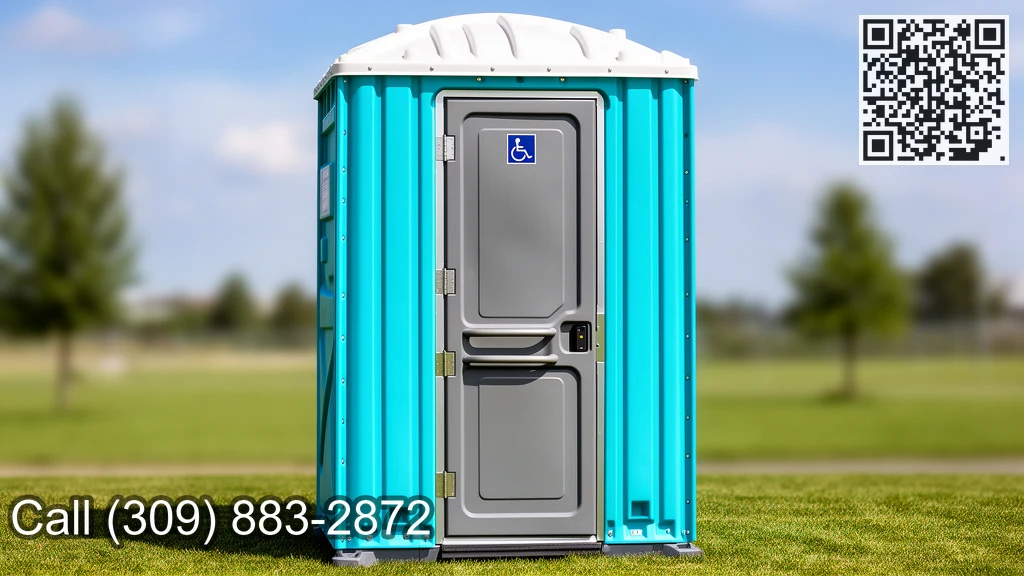
This is the component lots of customers and site organizers ignore. They consider an ada-compliant portable commode as a larger covering with a toilet someplace inside it. Availability is more details than that. The commode's location, the open flooring area around it, the turning space in the unit, and the bar positioning are all connected. You can not crowd one aspect without influencing the others.
In a long-term building, a negative format might be apparent throughout plan review. In a portable system, troubles frequently hide in ordinary view because everything is small. A shelf placed also reduced, a sanitizer dispenser placed where a mobility device foot rest needs to swing, or a cleansing specialist keeping added paper inside the unit can compromise the designated clearance even if the version itself was produced to fulfill requirements.
What "water closet clearance" suggests in plain language
"Water storage room" is the formal term the standards use for the bathroom fixture itself. "Clearance" refers to the usable area around that component that needs to remain available.
That clear space is not vacant by accident. It exists so a customer can come close to and place correctly. In an accessible commode room, the clearances around the toilet belong to just how transfers happen securely. Without that room, the grab bars can not do their work because the person can not get involved in the needed position to utilize them.
For mobile systems, that indicates two separate questions constantly need to be asked. First, was the device created and constructed to provide the called for partnerships among the commode, wall surfaces, bars, and open floor area? Second, is the device still being provided, positioned, and kept in such a way that preserves those relationships?
The second question is where compliance frequently unwinds. A washroom can leave the supplier's lawn in great problem and get to the website functionally compromised. I have actually seen indoor trash receptacles wedge right into the side clearance, cleansing tools left inside the unit, and short-lived handwashing devices placed where maneuvering space was expected to remain open. None of those adjustments feel significant to the person hurrying through setup. To the individual, they can be the difference in between usable and unusable.
Grab bars have to do with placement, not just presence
A lot of non-specialists presume the ease of access box is examined if the portable bathroom has bars connected somewhere on the wall. Sadly, that is not how it works.
The appropriate requirements need grab-bar guidelines to be fulfilled as component of the toilet-room technical demands. That suggests the existence of bars alone is not nearly enough. Their partnership to the toilet and surrounding clearances matters. They need to sustain use in the method the criteria intend.
This is where lingo from sales pamphlets can muddy the water. Terms like "ADA style," "wheelchair accessible," or "handicap system" are frequently utilized freely in the marketplace. An ada handicap obtainable mobile toilet ought to not be evaluated by marketing language. It ought to be reviewed by whether it is actually meant to satisfy the appropriate access needs, including the grab-bar and water closet clearance rules.
That difference is especially important when somebody is rate buying. A lower-cost large unit might seem like a wise alternative to an ada certified https://pristineportablesil.com/fresh-water-tank-rental/ portable washroom till you find out that the interior layout does not preserve the called for usage areas. Once it is on site, exchanging it out can be expensive, awkward, or impossible on a tight occasion schedule.
The course to the unit is part of the unit's usability
Even an appropriately configured interior does not resolve the entire issue. The accessible unit has to get on an available course and have an easily accessible entrance. If ramps or touchdowns are needed, those elements also need to adhere to ADA technological requirements.
This is one of one of the most typical site-level failures because it takes place outside the system itself. A vendor may provide an ada-compliant mobile bathroom that is made appropriately, but the positioning staff or event organizer can still create an obstacle by establishing it on soft ground, on a steep strategy, behind curbing, or in an area where individuals need to go across unstable surfaces.
Portable bathroom preparation typically takes place after bigger logistics decisions have actually currently been made. The phase goes here, the providing outdoor tents goes there, the generators require this corner, the fence cuts off that lane, and suddenly the "available" washroom winds up on the leftover patch of ground. Already, nobody suggests to leave out any individual, but exemption can still be the result.
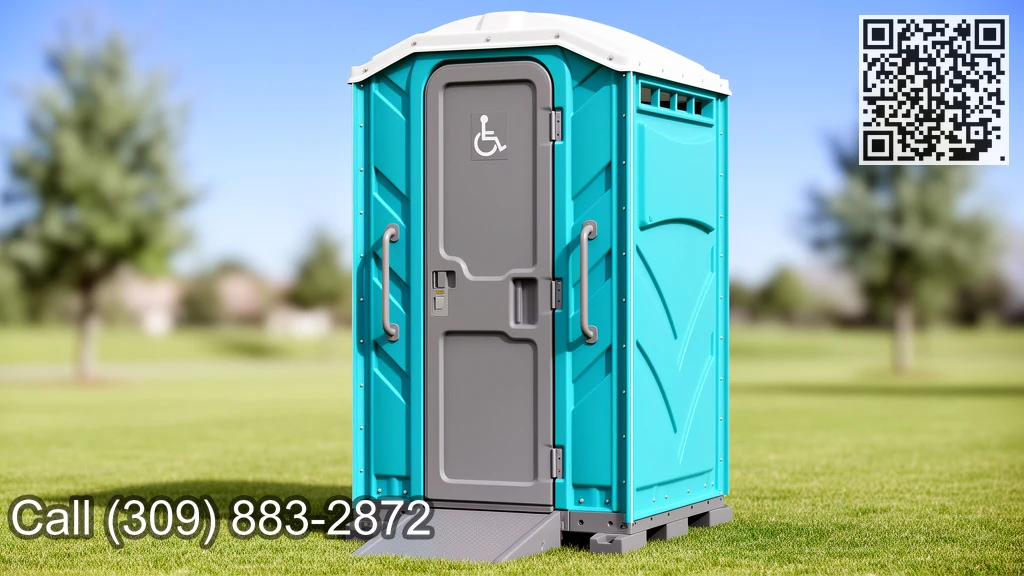
Stable placement matters too. If the system clears up erratically, the threshold and entrance experience can come to be more difficult. If the site gets muddy after rainfall, an easily accessible course that looked affordable in the morning might be a mess by mid-day. Those are not academic worries. They are the sort of points that divide a clean conformity plan on paper from real gain access to in the field.
A word concerning collections, circulation, and event timing
The 5 percent policy seems simple until the site has numerous activity areas or staggered attendance patterns. After that judgment comes in.
Imagine a weekend break occasion with a family area, a performance area, and a supplier lane. If all the typical units are spread out across those locations but the only ada certified portable toilets are grouped much from the busiest area, individuals with handicaps are efficiently supplied a different degree of service. The standards talk to amount and ease of access, but great planning likewise takes into consideration whether the available choice is where people really require it.
Timing matters also. Early in setup, crews commonly use the accessible device as a convenient storage place because it is bigger inside. That is a terrible practice. I have actually seen boxes of wristbands, instances of water, folding indications, and extension cables tucked away in the one ada portable bathroom planned for public usage. By opening up time, the materials could be gotten rid of, yet also temporary abuse can lead to damage, dust, or missing accessories. More than when, the "final cleaning" never ever happened.
The kinder and smarter approach is to deal with the obtainable toilet as the first unit that gets secured, not the last one that gets checked.
Questions worth asking before delivery day
If you are organizing an ada portable commode service, it aids to ask direct concerns while you still have choices. Vague reassurance is inadequate, particularly when the occasion host, property owner, or specialist might later be asked why the device picked was appropriate.
Here are the concerns I usually advise:
- Is this device planned to satisfy the 2010 ADA ease of access requirements for portable bathroom use?
- Will the device arrive understood the International Symbol of Accessibility?
- What website problems are needed for an available course and entrance?
- If the bathroom bank is split right into more than one cluster, the number of available units are needed?
- Are there any type of placement or upkeep practices that can hinder interior clearances?
That short conversation can conserve a great deal of rushing. It additionally tells you something concerning the carrier. A firm that recognizes ada compliant accessible portable restrooms ought to have the ability to answer plainly, flag restrictions truthfully, and help you think through path and positioning issues as opposed to concentrating just on distribution logistics.
Common misunderstandings that cause avoidable mistakes
Some access blunders happen because individuals neglect the guidelines. More often, they happen due to the fact that people assume they recognize the policies and fill out the spaces incorrectly.
One common misconception is that one available device anywhere on the home resolves the issue. It does not if separate collections are involved.
Another is that the inside of the unit is the supplier's trouble while the technique to the unit is the website host's issue, as if those can be divided neatly. In practice, users experience them as one constant course. If either side fails, the outcome is still inaccessibility.
A 3rd blunder is assuming that a bigger impact provides every person enough area regardless of the component layout. It might not. Clearances have to do with usable relationships, not just square footage.
Then there is the language problem. Individuals usually make use of phrases like ada certified portable commode, ada-compliant portable bathroom, ada compliant portable bathrooms, or ada-compliant mobile restrooms interchangeably. That is great in table talk, but the phrasing can hide unpredictability. What issues is not the label on the quote sheet. What matters is whether the device and its positioning in fact satisfy the suitable requirements.
Why this matters past technological compliance
There is a human side to this that ought to not be lost in conformity talk.
Using a portable restroom already asks a little patience from most people. For somebody with movement constraints, that patience can develop into stress and anxiety very quickly if the obtainable option is missing out on, hard to locate, tough to reach, or awkward. Nobody intends to be the guest scanning a congested event for the one significant system, only to find the path is harsh, the entrance is uncomfortable, or the inside is cluttered.
That experience lingers. People remember whether a site made room for them in a functional, respectful way.
There is likewise a broader context. ADA conformity is not obtaining lesser. If anything, enforcement and awareness continue to expand across markets. Also companies that made use of to think about accessibility as a slim centers issue are being forced to take it more seriously. Restroom access is one visible piece of that bigger image, and it is commonly the item individuals see first because it affects comfort, dignity, and basic participation.
The most sensible frame of mind to give the job
If you wish to make good choices regarding an ada accessible portable toilet, think much less about examining a box and even more about safeguarding an use case.
Picture an individual arriving by the easily accessible course, unlocking, navigating within, positioning at the toilet, using the grab bars as meant, and leaving without unneeded strain or improvisation. That easy mental walkthrough captures many problems before they come to be real.
It also changes the discussion in a much healthier direction. Rather than asking, "Did we purchase the ADA unit?" you start asking, "Can someone in fact use it comfortably and safely when they arrive?" That is the far better question.
For site supervisors, that may imply reserving solid ground early and maintaining that area clear. For event planners, it may suggest dispersing toilet collections a lot more thoughtfully. For rental providers, it indicates being specific about what your systems are made to meet and warning clients when website conditions might weaken availability. For maintenance crews, it means maintaining interior clearances and not dealing with the easily accessible device like overflow storage.
Grab bars and water closet clearance basics might sound technical, yet they are actually regarding daily functionality. The criteria require them because they resolve useful issues people face whenever they utilize the restroom. When those details are valued, an ada portable toilet does what it is intended to do. It lets individuals participate in job, occasions, and public life without a preventable barrier standing in the way.
 Ask ChatGPT
 Ask Grok
 Ask Perplexity
 Ask Claude
 Ask Google AI
 Ask You