ADA Mobile Toilet Rental: Understanding Exceptions and General Needs
Renting portable bathrooms appears straightforward until ease of access goes into the conversation, and it should. For occasion organizers, home supervisors, professionals, colleges, churches, and family members planning huge gatherings, the inquiry normally gets here late and with some stress and anxiety: do we need an ADA portable commode, and if so, how many?
That uncertainty is reasonable. Mobile washrooms sit at the crossroads of short-lived logistics and long-term civil-rights commitments. Individuals tend to think that since an arrangement is brief term, the policies are lighter or more adaptable. In practice, accessibility still matters, and the government standards do not go away even if the toilets arrived on a trailer as opposed to being constructed right into a wall.
The basic structure is clear. In the United States, the controlling government availability requirement for portable toilet rentals is the 2010 ADA Specifications for Accessible Style, as interpreted by the Department of Justice and the Accessibility Board. For most general uses, an available device is not optional home window dressing. It is part of what makes a restroom arrangement usable by the public.
Where individuals obtain tripped up is in the details. They find out about an exception for building sites and assume it applies a lot more generally than it does. They buy a larger system with a sticker label on the door and assume that alone makes it certified. Or they count the variety of toilets on website however fail to remember that the guideline applies by cluster, not simply by the grand total spread across a property.
This is where cautious planning assists. If you understand the slim exemption, the 5 percent policy, and the core physical needs for an available setup, you can make much better decisions early and stay clear of the pricey shuffle that takes place when the units are already delivered.
The question behind the rental order
When someone requests for an ada mobile bathroom rental, they are usually asking three different questions at once.
First, they want to know whether the regulation requires an accessible device whatsoever. Second, they would like to know whether a certain device being used by a vendor in fact qualifies as an ada compliant mobile commode. Third, they need to know whether placing that system someplace on the website is enough, or whether the surrounding conditions also have to be accessible.
All 3 matter.
An ada obtainable mobile restroom is not just a larger box with a larger door. Availability depends upon the device itself, how many available systems are offered within each collection, how the unit is determined, and whether a person can reach it and utilize it. That last point gets overlooked more than it should. A compliant-looking system set beyond unequal ground, obstructed by challenges, or reached only by a noncompliant ramp can still create significant gain access to problems.
What the government basic actually controls
The governing benchmark is the 2010 ADA Criteria for Accessible Design. That is the government reference factor for ease of access, and it relates to mobile bathroom services via the analyses made use of by the Department of Justice and the Gain Access To Board.
That issues because a lot of discussions in the area still drift towards routine or supplier shorthand. A person may state, "We always drop one handicap unit if the client asks," or, "It's short-term, so the regular guidelines do not really apply." Those are not risk-free assumptions. The controlling criterion is not what a vendor generally does. It is the ADA requirement and its appropriate technical and scoping requirements.
For portable bathroom arrangements made use of by the public, the accessible-unit requirement stays essential even at short-lived events. Short-lived does not imply exempt. A festival that lasts one weekend, a church charity event, a school field day, and a seasonal neighborhood occasion can all raise the very same ease of access issues.
The 5 percent guideline, and why words "collection" matters
One of the clearest regulations in this location is the scoping requirement for portable single-user toilet units. At the very least 5 percent of the units in each collection should come. The Accessibility Board has actually made clear that this applies also at temporary events.
That expression, "in each cluster," deserves focus. People commonly total all washrooms across a site and afterwards assume they are covered if one easily accessible unit shows up somewhere in the matter. However the guideline concentrates on the collections of systems, not simply the total occasion inventory.
Imagine a big exterior occasion with portable bathrooms placed in several different places throughout the grounds. If those areas work as distinctive collections, access needs to be taken into consideration at each collection, not just at the website as a whole. An individual should not be expected to take a trip throughout the location to discover the only obtainable alternative while everybody else has a close-by standard unit.
This is one of one of the most typical planning mistakes since it often tends to show up late. On paper, the overall device matter looks fine. On the ground, the easily accessible commode is parked in the incorrect place.
For clients inquiring about ada certified portable commodes, this is typically the initial factor that scuffs. It is not just a matter of whether you have one obtainable device. It is a matter of just how your restroom layout is organized.
The slim construction-site exemption
Now for the piece that creates one of the most confusion.
There is an acknowledged distinction including mobile toilet units at building websites made use of exclusively by building and construction employees. Those units are excluded from the portable-toilet availability scoping demand in the pointed out 1991 requirement. That is a particular carve-out, and it is not a covering exemption for anything taking place near construction or on rough ground.
The key word is exclusively. If the mobile bathrooms are for building employees only, that exemption becomes part of the legal discussion. Once individuals stretch that logic beyond its actual borders, difficulty starts.
A mixed-use website transforms the picture. A task with visitors, participants of the general public, or other non-construction individuals elevates a different collection of factors to consider. Also, a basic mobile bathroom rental for an occasion, public gathering, or customer-facing setup does not fall under that narrow construction-personnel exception.
This is why it assists to decrease and ask a plain-language inquiry prior to renting. Who will be making use of these devices? If the solution consists of the general public, guests, participants, clients, parishioners, trainees, or family members, you are no longer in the secure area of a construction-only assumption.
https://pristineportablesil.com/ada-compliant-toilet-rental/People often latch onto the expression "building and construction website" as though it fixes whatever. In technique, the much better lens is use, not atmosphere. Mud, fence, devices, and temporary problems do not instantly develop an exception. Exclusive use by building employees is what issues in the exemption described here.
What makes an available mobile restroom greater than a label
A device can not become certified by marketing language alone. Terms like ada handicap accessible mobile washroom, ada compliant obtainable portable washrooms, or ada-compliant portable restrooms sound guaranteeing, yet the actual requirements are useful and physical.
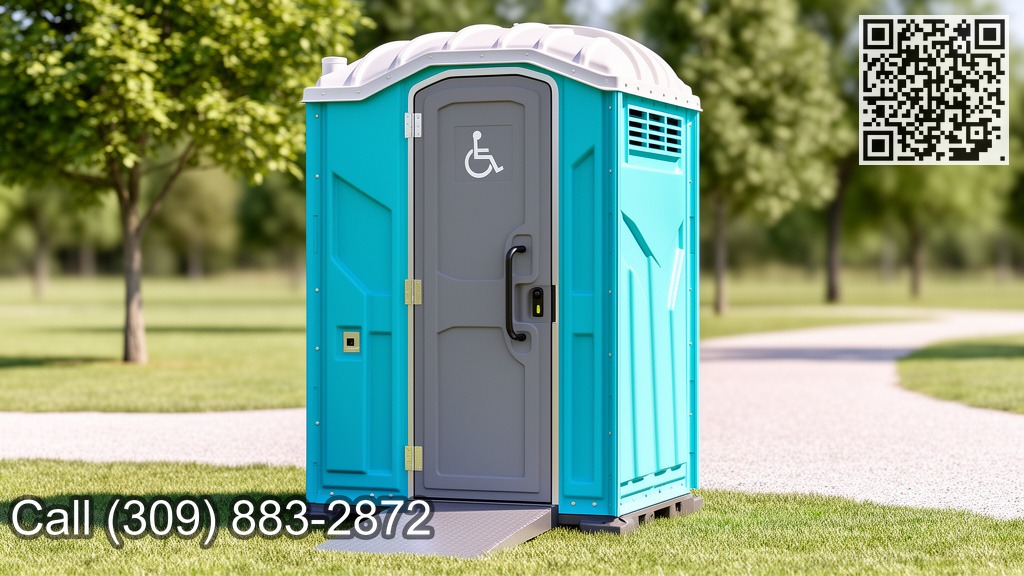
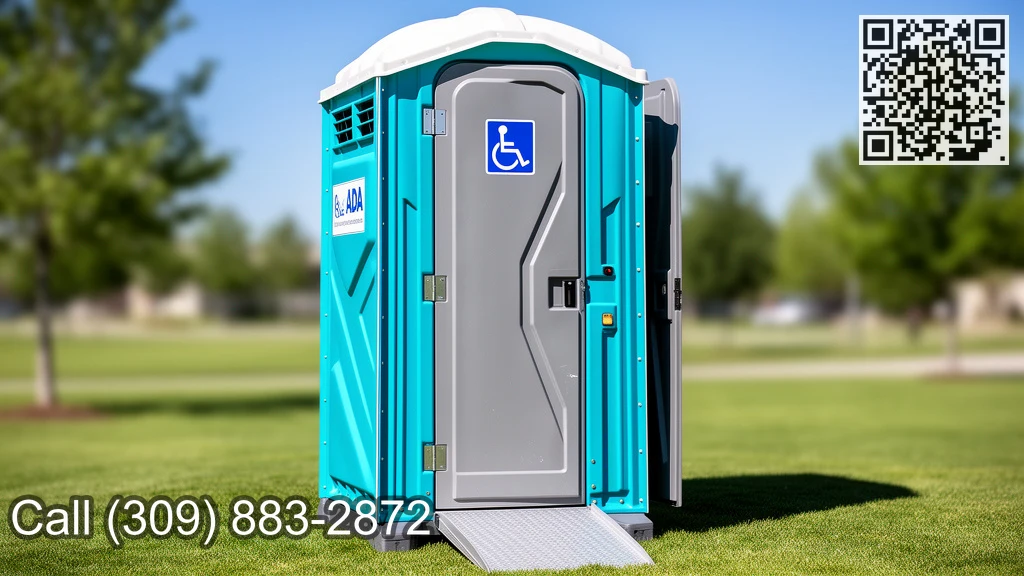
Accessible mobile bathroom systems need to be related to the International Sign of Accessibility. That is a visible and important part of conformity because customers require to be able to find the available alternative without uncertainty. Still, signage is just one piece.
The devices have to additionally have an accessible path and entryway. If ramps or landings are required, those features need to abide by the ADA technological demands. This point tends to surprise people due to the fact that they focus on the toilet box itself and neglect that the path to it matters just as much.
Anyone who has actually functioned around short-lived sites has seen exactly how conveniently access can be undermined by positioning. A vendor might provide an ada mobile washroom that is completely proper in theory, just for it to be set on an unequal area, crowded by barricades, or separated behind a grade change that makes entry tough or impossible. The requirements do not stop at the door.
Inside the device, the bathroom room technical requirements also enter into play. That includes component clearances, transforming area, and door handling clearances, along with the applicable grab-bar and water-closet clearance regulations. Those are technological demands, and they exist due to the fact that usability depends on greater than a bigger footprint. An individual utilizing a wheelchair or other movement help requires enough area to method, get in, shut the door, turn, setting, and transfer as intended.
This is why a true ada compliant mobile toilet is not interchangeable with a merely roomy portable device. Even more room is helpful, yet the setup and clearances are what establish whether the area functions accessibly.
Temporary events still bring genuine obligations
Short-term events are where misunderstandings increase. Organizers are handling authorizations, car parking, weather condition, volunteers, shipments, and group flow. Toilet leasings end up being one more line item, and access can obtain reduced to a basic quantity question.
But short-term events are specifically component of the conversation below. The Gain access to Board has claimed the 5 percent accessible-unit need uses also at temporary occasions. That implies a one-day charity event or weekend break fair need to not be treated as if access is optional because the configuration is fleeting.
In real life, this usually ends up being a positioning problem greater than a purchase problem. Organizers may rent out the correct number of ada compliant portable washrooms but place them in a manner that isolates them from the occasion's functional center. An accessible course that exists only on a website map, not on the ground, is a problem.
The thoughtful strategy is to plan the restroom location the means you would certainly intend obtainable car parking or an entryway. Where are people showing up? Where are the primary courses of travel? What surface adjustments or pinch factors will matter once the crowd fills in? Those inquiries are illegal facts. They form whether a visitor can utilize the event with dignity.
Why "one accessible device" is not always enough
There is a strong temptation to assume in minimums. If a consumer listens to "5 percent," the mind right away transforms toward the smallest feasible number that could please the guideline. That is easy to understand, specifically when budgets are tight.
Still, minimum conformity and practical gain access to are not always the very same thing in practice.
If systems are divided right into multiple clusters, the math may call for available units in more than one place. If website traffic is hefty, a single accessible device might produce lengthy waits that disproportionately affect users who require it. If a website is large, one appropriately classified ada mobile toilet put far from the primary circulation might fulfill neither the spirit neither the functional function of accessibility.
This is where judgment matters. The legislation supplies the structure, but great planning asks a second inquiry: will a person reasonably be able to discover and utilize this washroom with the same fundamental ease used to others?
That is commonly the distinction in between a checkbox strategy and a respectful one.
The path to the unit can make or break compliance
Among all the ada portable commode demands, the available course is just one of the most convenient to underestimate.
People photo compliance as a home of the system. They forget that accessibility starts long prior to the door swing. If the path is obstructed, unpredictable, steep, or separated by features that need a noncompliant ramp or touchdown, the configuration can fall short individuals even if the mobile bathroom itself was made to the best technical layout.
The criteria require an available route and entrance, and when ramps or landings are required, those attributes have to follow ADA technological needs. That puts duty on the more comprehensive configuration, not simply the vendor's equipment inventory.
For coordinators, this suggests the distribution area is not a second thought. It is part of compliance. A solid, reasonably navigable approach issues. So does avoiding last-minute area improvisation, like setting the obtainable unit anywhere there is room after the basic systems are already in place.
The most avoidable blunders happen when availability is managed at the end of the design process as opposed to the beginning.
What tenants must ask before shipment day
If you are renting out for a public or guest-facing setup, it aids to ask straight concerns early. You do not need a lawful workshop. You require clarity about the system, the count, and the site plan.
Here are the functional concerns that generally matter most:
- Is the unit being given intended to work as an ada certified mobile bathroom, not just a bigger conventional model?
- How lots of bathroom collections will certainly feed on the website, and does each cluster have actually the needed easily accessible coverage?
- Will the system be identified with the International Sign of Accessibility?
- Is the organized path and entrance obtainable, including any type of ramp or landing that may be needed?
- Has the final placement been assessed with the actual website conditions in mind, not just the order sheet?
Those five inquiries tend to reveal most avoidable issues before the truck arrives.
Common misconceptions that bring about negative setups
Over the years, the very same mistaken presumptions tend to surface repeatedly. They deserve naming plainly because they sound reasonable up until you compare them to the real requirements.
The initial misconception is that momentary means exempt. It does not. The 5 percent policy still uses at momentary events.
The second is that obtainable unit somewhere on the property fixes the problem. It might not, particularly when washrooms are set up in separate clusters.
The third is that the construction-site exemption uses whenever a setup really feels sturdy or work-related. It does not. The exception defined here is connected to portable units made use of exclusively by building and construction personnel.
The 4th is that signage alone shows conformity. Identification with the access icon is called for, however it is only one part of the general picture.
The fifth is that the device can be certified even if the course to it is not. The requirements need an easily accessible course and entryway, which bordering context matters.
When clients recognize these points early, the rental conversation becomes a lot easier and much more productive.
A more comprehensive conformity environment is forming expectations
Accessibility enforcement does not exist in a vacuum, and it works to identify that. A pertinent 2026 growth highlights the wider instructions of ADA compliance task: the Division of Justice extended the target date for state and city government internet and mobile access regulations to April 26, 2027 for bigger entities.
That update is not regarding mobile toilets specifically, but it indicates something crucial. Availability is being applied and talked about across more components of business life, not fewer. Physical accessibility, digital accessibility, public-service access, and temporary-access inquiries significantly sit within the exact same broader conformity culture.
For any person in charge of facilities, events, or public accommodations, that wider climate needs to motivate a much more significant strategy to details like ada compliant portable washrooms. Not because mobile bathroom rentals are glamorous or high profile, yet since they become part of whether people can participate totally and with dignity.
The human side of a technical requirement
It is simple to allow a subject such as this come to be abstract. Percentages, route demands, technological clearances, symbols, scoping exceptions. Every one of that is essential, but none of it is the real reason availability matters.
The actual reason is that a restroom is not optional infrastructure. When easily accessible restroom accessibility is missing out on, people notice quickly, and they pay the rate personally. They leave early. They rely on help they need to not require. They are compelled to intend around an obstacle that others barely register.
That is why the difference in between an ada portable washroom and a typical system can not be dealt with as cosmetic. It affects whether a person can stay at an event, do their task, attend a solution, sustain a child, or participate in public life without avoidable humiliation or hardship.
The regulation offers us the structure. Good operators, cautious planners, and diligent occupants consider that structure sensible effect.
Getting it right without overcomplicating it
For most non-exempt portable toilet rentals, the course is fairly uncomplicated once the complication is removed. Make use of the 2010 ADA Requirements for Accessible Style as the managing government standard. Keep in mind that for clusters of portable single-user units, a minimum of 5 percent in each cluster must be accessible, including at short-term events. Make sure the available system is identified with the International Sign of Accessibility. Verify that there is an obtainable path and entrance, with any called for ramps or touchdowns satisfying the suitable technical demands. And do not fail to remember that the system itself must please the technological toilet-room needs that regulate clearances, navigating area, and associated features.
Treat the construction-personnel exception meticulously and narrowly. It is not a shortcut for general public rentals.
If you come close to ada mobile commode leasing with that mindset, the procedure becomes much less murky. Much more notably, the result is extra functional for individuals that depend on it. That is the typical worth aiming for, whether you are buying one ada-compliant mobile bathroom or coordinating multiple banks of ada certified portable bathrooms across a huge temporary site.
 Ask ChatGPT
 Ask Grok
 Ask Perplexity
 Ask Claude
 Ask Google AI
 Ask You